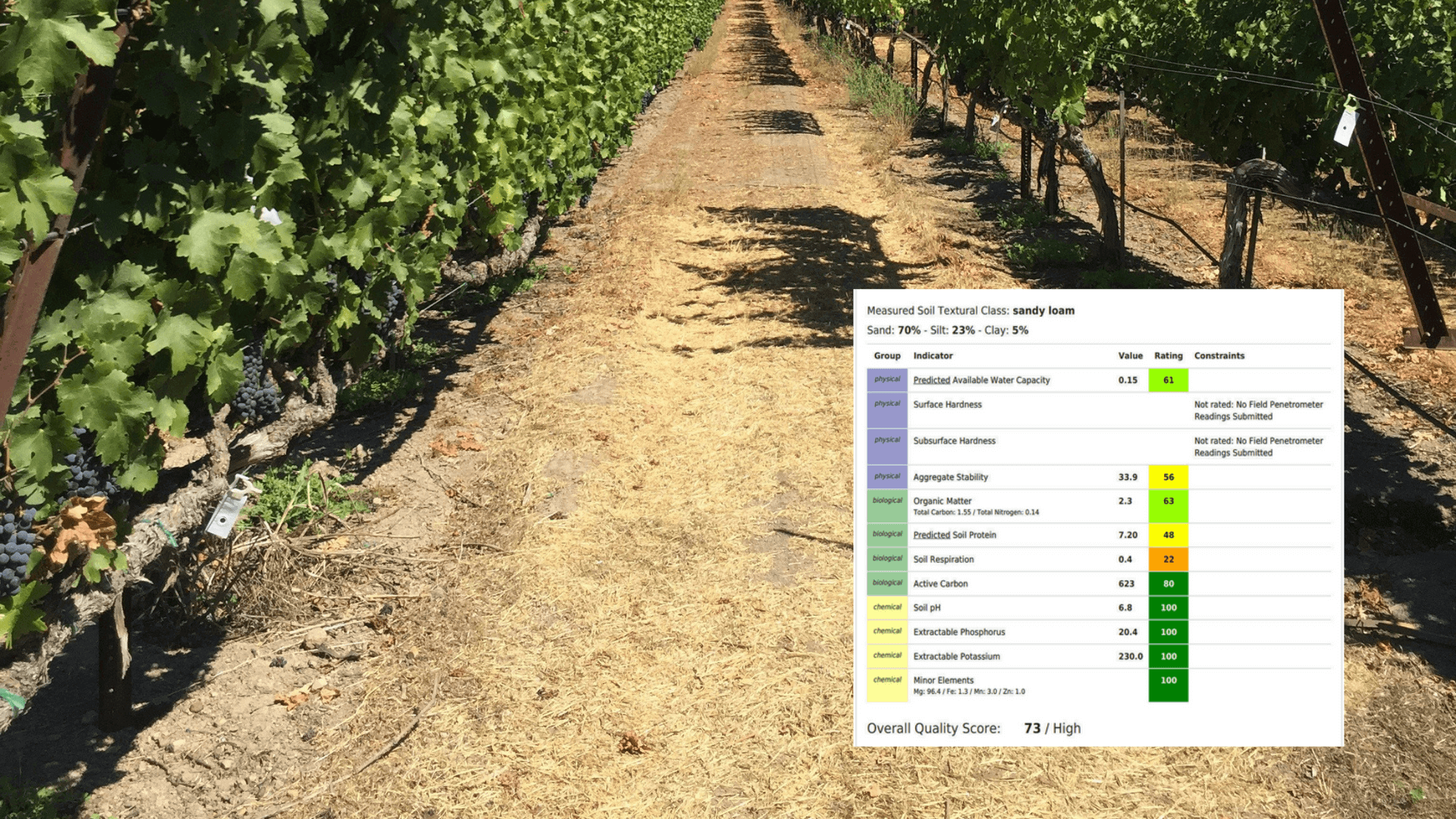
Soil analysis in vineyards plays a vital role in optimizing vine health and improving grape yields. It involves evaluating the soil’s chemical, physical, and biological properties. By understanding the soil’s nutrient content and structure, vineyard managers can make informed, data-driven decisions on different soil management practices such as fertilization, irrigation, and floor management.
Why making vineyard soil analysis?
Analyzing vineyard soils is key to understanding soil health, identifying nutrient needs, and optimizing vine growth for higher-quality grapes and sustainable vineyard management. For new vineyards, soil analysis helps determine initial soil composition and enhancements needed to support vine establishment and growth. While for established vineyards, the key is to monitor changes in nutrients, pH, and organic matter over multiple years.
In a nutshell, making vineyard soil analysis has several benefits, such as:
- determines nutrient availability
- optimizes fertilization
- predicts and maximizes yield potential
- optimize grape quality
- improve long-term soil health and future vineyard productivity
Types of soil testing
Several different types of soil testing exist, each focusing on different aspects of soil properties. The following are the most common field and laboratory soil tests; however, not all may be relevant for your vineyards:
Physical Soil Tests
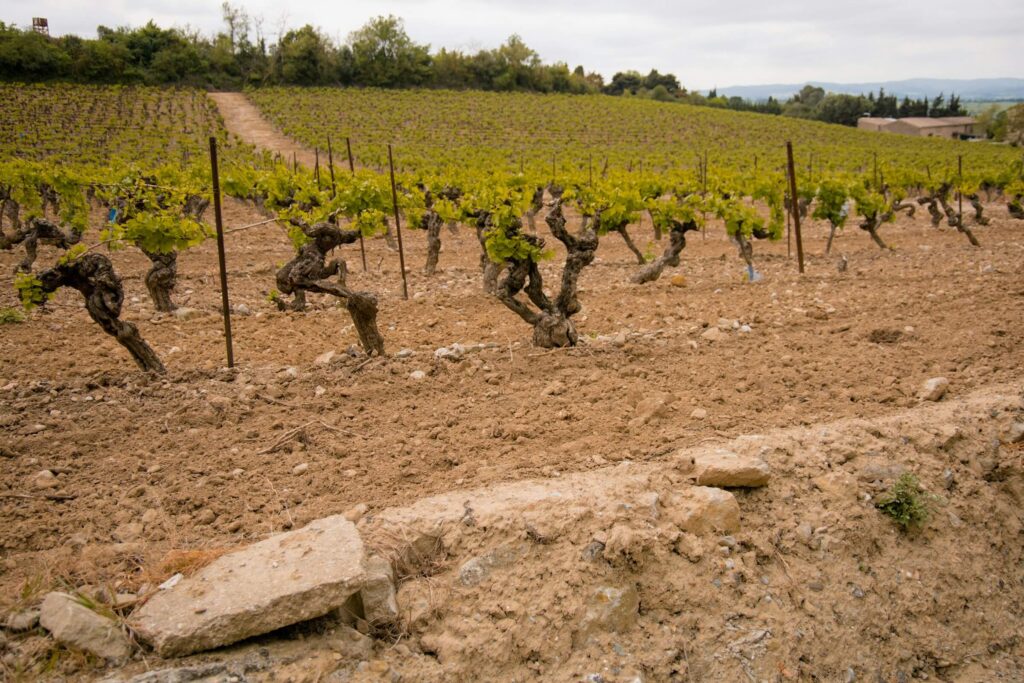
To evaluate essential characteristics of vineyard soils that influence plant support, root growth, drainage, aeration, and nutrient retention. Namely, poor soil conditions, like compaction or unsuitable structure, can hinder root development and limit grapevine health.
Key physical properties include:
- Soil texture: refers to the proportions of sand, silt, and clay particles in the soil. It determines the amount of water a soil can hold and the rate at which water and dissolved solutes are potentially available for vine uptake. For example, coarse-textured soils (like sandy soils) allow rapid water movement but have low water-holding capacity, which can lead to quicker drying and less nutrient retention. In contrast, fine-textured soils (like clay) retain moisture well but may have slower infiltration rates, which can increase water-holding capacity but may limit root growth and aeration if overly saturated.
- Soil structure: refers to the arrangement of soil particles (sand, silt, and clay) into aggregates, known as peds. It affects porosity and permeability, influencing water movement through the soil. Well-structured soils, like those with granular or blocky aggregates, enhance drainage and support root growth, while poor structure can impede vine development and increase erosion risk.
- Soil depth: determining the distance from the surface to an impervious layer or an area of poor drainage. Greater soil depth provides a larger volume of potential moisture than does shallow soil. Thus, grapevines grown on shallow soils will suffer drought stress faster than those in depth soil if irrigation is not available.
- Soil porosity: refers to the percentage of soil volume not occupied by solid particles. Influenced by texture and structure, it affects the soil’s ability to retain water and nutrients. Coarse soils feature larger macro-pores, while fine soils contain many micro-pores that hold water tightly but may restrict availability to vines.
- Soil permeability: measures how easily air and water move through the soil. Adequate drainage is crucial for healthy root growth and the overall vitality of the vineyard.
Chemical Soil Testing
Essential for understanding the nutrient content and chemical properties of vineyard soils. It analyzes both macronutrients and micronutrients, along with pH levels, salinity and sodicity.
Most common chemical soil testing includes the following soil properties:
- Soil pH: a basic factor that should be the first consideration when evaluating a soil test as it influences nutrient reactions and availability of macronutrients and micronutrients for the grapevines.
- Macronutrients: there are six macronutrients – nitrogen (N), phosphorus (P), potassium (K), sulfur (S), calcium (Ca), and magnesium (Mg). Nitrogen, phosphorus, and potassium are considered primary macronutrients due to their higher demand by vines and their role in preventing common nutrient deficiencies.
- Micronutrients: there are eight micronutrients – iron (Fe), manganese (Mn), zinc (Zn), copper (Cu), boron (B), molybdenum (Mo), chlorine (Cl) and nickel (Ni). For the vineyards the most important are iron (Fe), zinc (Zn), copper (Cu), and manganese (Mn). Nutrient availability, particularly for micronutrients such as iron, manganese, and zinc, is strongly influenced by soil pH. For instance, in high-pH (alkaline) soils, these micronutrients may become less available to vines, impacting vine health and productivity.
- Cation Exchange Capacity (CEC): Measures a soil’s ability to hold positively charged nutrients (cations) like calcium (Ca), magnesium (Mg), potassium (K), and sodium (Na). Higher CEC values indicate greater nutrient-holding capacity, which is essential for maintaining soil fertility and providing consistent nutrient availability to vines.
- Electrical Conductivity (ECe): Used to measure soil salinity, with high ECe values indicating excessive soluble salts such as sodium chloride, bicarbonates, and carbonates, which can affect plant growth and water absorption. This test is more commonly performed in vineyards located in arid and semi-arid regions, where low rainfall and irrigation can lead to salt accumulation in the soil, such as in California, Australia, Spain, South Africa, etc.
Biological soil testing
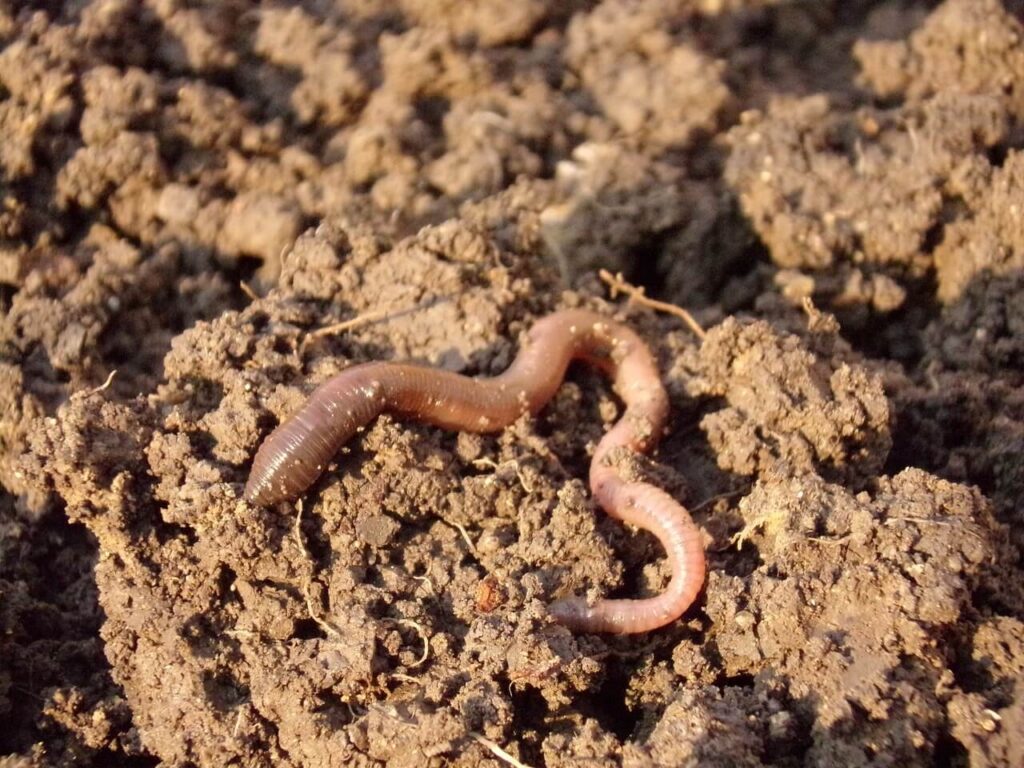
To evaluate the health and activity of soil microbes crucial for nutrient supply, resilience, and long-term fertility. While organic matter analysis is common, organic and regenerative vineyards often add tests for microbial diversity, soil organic carbon, and count earthworms in the soil, as they serve as a good indicator of soil health.
Common biological soil testing includes the following:
- Sol Organic Matter (OM%) – a measure of the organic material in the soil that comes from microorganisms, plants and animals. OM is usually reported on a percentage-by-weight basis in laboratory reports. While higher OM percentages generally indicate healthier soils, the optimal level depends on factors like soil type, climate, and agricultural practices.
- Carbon-to-Nitrogen Ratio – determines the speed of organic material decomposition as well as nutrient release patterns. A low C ratio (< 20:1) promotes rapid decomposition, leading to a quick release of nutrients.
- Soil organic carbon (SOC) – refers specifically to the carbon component of soil organic matter (SOM) and represents the carbon stored in soil. SOC is usually reported as a percentage or amount per unit of soil (e.g., grams of carbon per kilogram of soil).
Vineyard soil analysis test results
After soil samples are collected, they are sent to the laboratory for testing. The most important aspect of soil analysis is ensuring that proper soil sampling is done. Namely, only quality sampling process can provide reliable test results. To learn how to take good soil samples, check out our guide here.
After the soil test results return from the laboratory, it’s essential to interpret them correctly to plan fertilization activities. Testing procedures vary based on the vineyard’s location, laboratory, and soil type, so this needs to be taken into account when interpreting soil test results.
Depending on the soil laboratory, some provide easy-to-read results with recommendations on fertilisation based on the soil analysis results and growing crops, while others don’t. Soil test results and optimum soil characteristics differ depending on the vineyard location, laboratory analysis, soil type, and vine variety.
North Jersey RC&D conducted an interesting study comparing soil test results among different laboratory services across the U.S. They collected soil from a single field in northern New Jersey and sent samples to nine laboratories for analysis. Eight out of nine laboratories used the same soil analysis method; however, the results for the same nutrients, varied significantly from lab to lab. Thus, it’s important to choose the same laboratory over the years in order to be able to compare results over years.
| Choosing a soil lab to ensuring reliable results for your vineyard Choosing a laboratory is not always an easy task; although price and convenience are often the main factors, a few other aspects should be considered as well, such as: – Type of Results Provided by the Laboratory: The laboratory report should report the amount of nutrients readily accessible to plants and not simply the total nutrient content in the soil. Namely, the total nutrient content doesn’t provide sufficient information about the nutrients directly available for plant uptake, as nutrients can be bound in various ways within the soil. Typically, only a small portion of the total nutrients is accessible to plants. – Suitability of Methods for Plant-Available Nutrients: The chosen laboratory should use the right method to determine plant-available nutrients based on the specific soil type of vineyard blocks. Different soil types may require tailored testing approaches to assess nutrient availability accurately. – Local Interpretation Standards: Check whether a specific method for interpreting soil analysis results has been developed in your region or country. Different regions may have varying standards and methodologies, which can influence how results are understood and applied. |
Improve the soil health based on soil analysis
Based on soil analysis, growers can first understand the limitations to growing vines and producing quality grapes and, based on that, take action to eliminate or moderate the limitations and improve the vineyard’s soil health.
Soil’s physical properties
Although soil’s physical properties can’t be changed much, they can represent the essential limitations to growing vines. Thus, they must be considered already in the vineyard planning phase by adjusting vineyard block shape, planting style, row orientation, and vine variety. If there is any rock that is naturally fractured or weathered, it can be broken up by deep ripping or removed from the potential vineyard block area. In an established vineyard, the effect of deep ripping can be enhanced by the application of gypsum.
If erosion occurs in the vineyard, cover crops can be planted in the mid-row, which improves soil structure and increases the soil’s ability to store water.
Read also: Cover cropping: alternative to herbicide use in the vineyard
Soil’s chemical properties
Soil analysis provides the soil’s chemical properties, and if there are any limitations, they can be eliminated with proper floor and soil management.
Soil pH—The optimal soil pH for vine performance is between 5.5 and 7 (depending on the grape variety), which is slightly acidic to natural. If the pH result is low, the soil is acidic and can be corrected through the application of lime (liming). If pH levels are high, it means that the soil is alkaline and can be corrected with sulfur or using acidifying fertilizers such as urea or ammonium sulfate. It’s very important to get the right pH levels in the soil because the availability of many micronutrients such as Mn, Cu, Zn and B depends on the soil pH level.
Nutrients—Based on soil testing, essential nutrients can be supplied through soil or foliar fertilization or fertigation, while nitrogen can also be supplied by growing legumes in vineyards.
Salinity – can be caused by excessive fertiliser, poor-quality irrigation water, saline groundwater, or limited rainfall. Salts can be leached out through proper soil drainage, supported by rainfall or low-salinity irrigation water.
Soils biological properties
Soil organic matter (OM) levels vary depending on the vineyard’s location, climate, soil structure, and management. Vineyards are often recommended to maintain OM levels around 2-4%. In dry climates, a minimum of 1.5% organic matter (OM) is recommended to sustain soil fertility. However, higher levels can provide better resilience against drought and erosion. If low levels of organic matter are indicated in the soil analysis report, they can be increased by applying compost, mulches, manures or planting cover crops in the vineyards mid-rows.
Research from Spain comparing soil quality indicators (physical, chemical, and biological) across different managed vineyards found that regenerative and minimum-impact practices significantly increased soil carbon stocks and soil life (number of protists, nematodes, and microarthropods) compared to intensive practices. Showing that ecological farming can restore degraded vineyard soils in Mediterranean climates.

Monitoring vineyard soils over time
Initial soil sampling and testing should be done before planting the vineyards to identify any growth constraints. In established vineyards, regular soil tests for nutrients, pH levels, and organic matter help track key soil trends. Depending on the vineyard goals, climate, soil type, and management practices, soil analysis should be conducted every 1 to 5 years, ideally at the same time of year (either in autumn or spring), and analyzed by the same laboratory to ensure accurate comparisons over time. This consistency is crucial for monitoring long-term nutrient trends and maintaining optimal soil conditions for grapevine health and productivity.
In addition to soil testing, growers can also opt for sampling and analyzing leaf blades or petioles during the vine-growing period to gain additional insights into nutrient levels such as nitrogen (N), phosphorus (P), and potassium (K) as concentrations change throughout the season. Consistent lab testing helps minimize variability and allows long-term trend analysis.
Conclusion
Vineyard soil analysis is an indispensable tool for sustainable and productive viticulture. By examining the physical, chemical, and biological properties of the soil, vineyard managers can make data-driven decisions that enhance vine health, optimize grape quality, and improve long-term soil vitality. The process helps identify potential limitations and implement corrective measures, such as adjusting pH, managing nutrients, or enhancing organic matter.
Consistent soil monitoring over time allows vineyard managers to track nutrient trends, adapt practices to changing conditions, and maintain optimal soil health. Whether establishing a new vineyard or optimizing an existing one, soil analysis provides critical insights for sustainable management, leading to robust vines, improved grape yields, and a balanced vineyard ecosystem.
Resources:
- Diane Brown. Soil sampling vineyards and guidelines for interpreting the soil test results. Michigan State University Extension, on May 07, 2013. (online)
- AWRI. Fact Sheet VITICULTURE. 2018. What is soil health?
- Annie Klodd. Tissue and soil nutrient testing for cold climate grapes. University of Minnesota Extension, on 2021. (online)
- Andrés P, Doblas-Miranda E, Silva-Sánchez A, Mattana S, Font F. Physical, Chemical, and Biological Indicators of Soil Quality in Mediterranean Vineyards under Contrasting Farming Schemes. Agronomy. 2022; 12(11):2643. https://doi.org/10.3390/agronomy12112643
- AWRI. Fact Sheet VITICULTURE. 2018. Vineyard management practices to improve soil health.
- North Jersey RC&D. Comparing Soil Test Results. (online)